How we taught the auto.moto.pt AI sales assistant
The auto.moto.pt AI sales assistant learns from rules, tools and real user questions, without training a model for it.
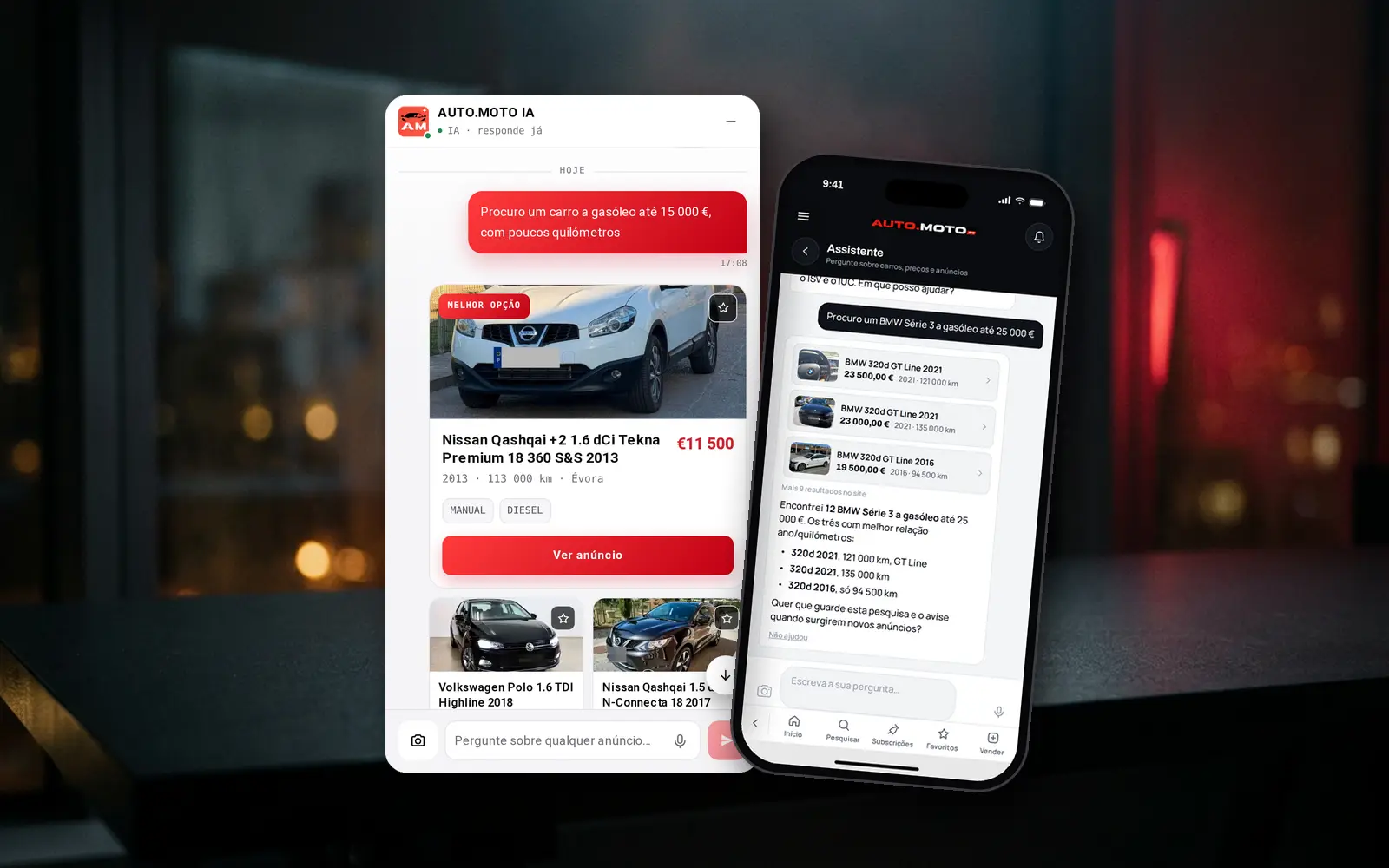
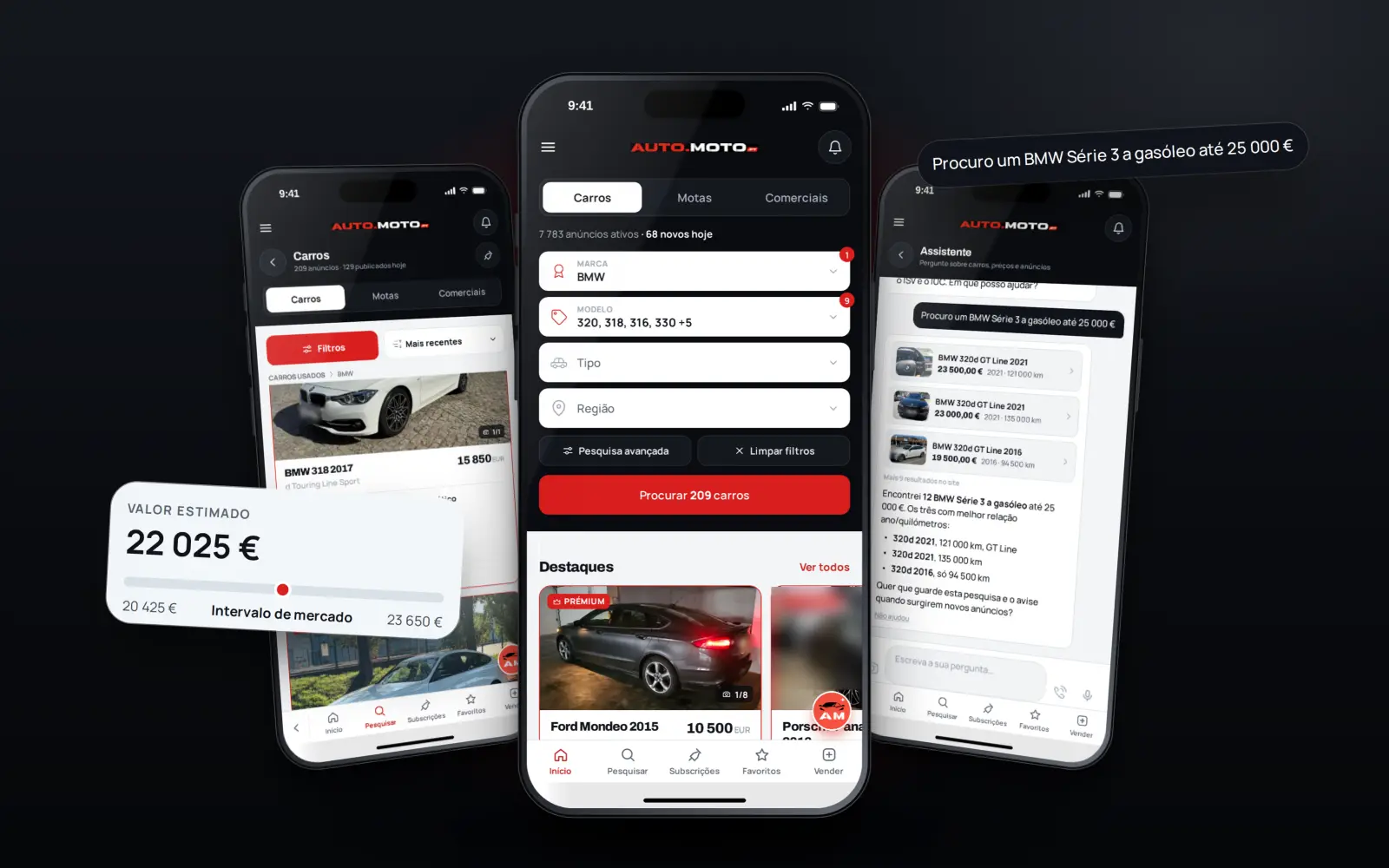
Since 26 September 2026 every page of auto.moto.pt(opens in a new tab) has an AI sales assistant in the corner. It searches adverts, estimates what a car is worth, works out IUC and ISV, prepares an advert from a conversation and drafts a message to a seller. People often ask how we trained it. The honest answer is that we did not train anything for it.
What teaching means here
The assistant uses an AI model from an external provider, through its API, as it comes. What we built is everything around it: the instructions it follows, about twenty tools over our live catalogue that the model calls (tool calling), rules enforced in code rather than in words, a set of tests, and a weekly loop that turns real customer questions into instructions. That is what this article calls teaching.
Tools instead of memory
The model knows nothing about our adverts or our prices, and we prefer it that way. Every fact comes from a tool. The search runs with the permissions of an anonymous visitor, so it only sees published adverts. A car's value comes only from the same valuation engine the website uses, and when a field is missing the assistant asks instead of guessing. IUC and ISV come from the site's own simulators.
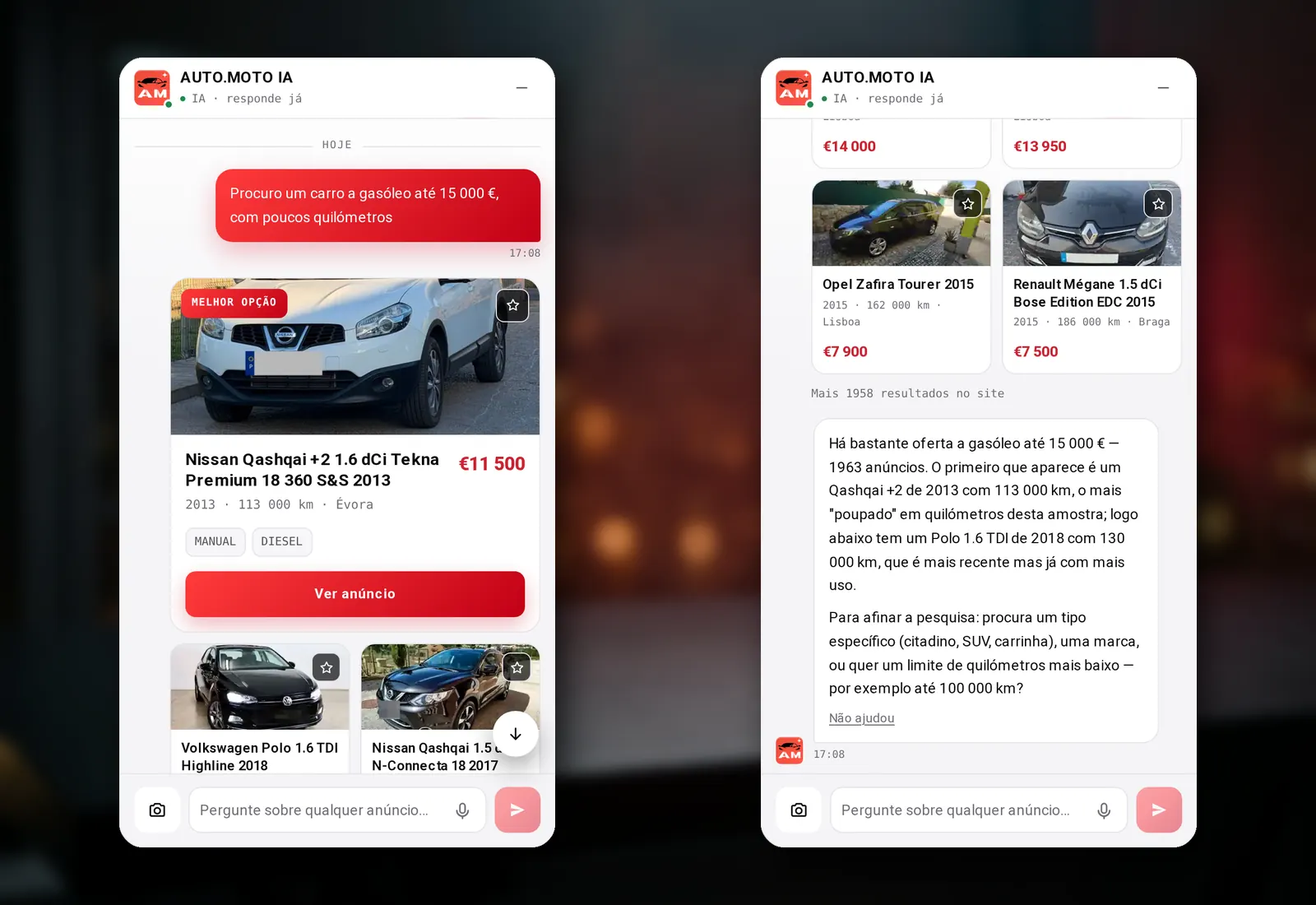
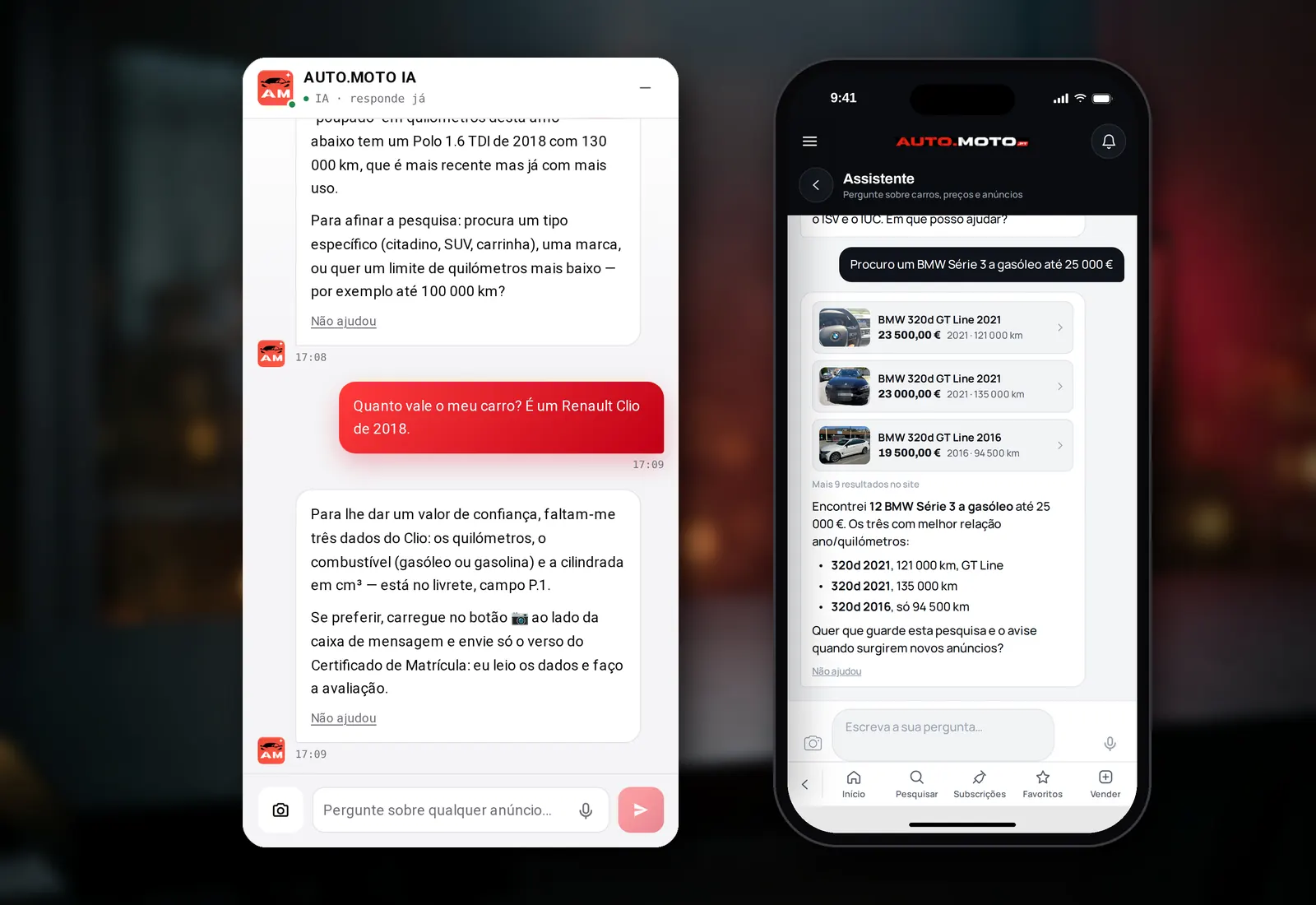
Search results reach the screen as cards, as data, before any text, and the model knows they are already shown. The adverts and links on screen come from the tools, not from the model's text. We did not build a document index either: the site's services fit in the instructions, prices come from the live system, and the few repeated in the instructions are checked against the code by a test.
Nothing happens without a click
The assistant prepares, the person decides. It drafts a message to a seller in the seller's language, with a translation, and nothing is sent until the visitor presses send. It can suggest an offer, but the amount is set by our server, at most 15 percent under the asking price, and the negotiation form opens already filled in. Saving a search is a button the visitor presses. Phone numbers, emails and links are removed from advert descriptions before the model sees them.
A photo of the vehicle registration certificate turns into an advert draft. The photo is read on our own server, with a local text recognition engine, and never reaches a third party. The VIN is masked and stays out of the advert unless the seller ticks the box.
A weekly loop of real questions
The first lesson plan was the customer support mailbox. We read 90 days of it: 472 incoming messages, of which about 42 were real requests. The main topics: how to post or edit an advert (13 threads), signing in and passwords (9), people describing their car because they want us to buy it (6), and questions about an advert sent to us instead of the seller (5). Each topic became a block of instructions or a tool: we do not buy cars, but the assistant prepares the advert; a question for a seller becomes a drafted message.
Every fact was checked in the code before it went into the instructions. The model kept sending people to a bin icon under each photo; the button is called «APAGAR FOTO», and that is now written word for word. Renewing an advert spends the free advert of the month, so the assistant says so before suggesting it.
Since then the loop runs every week: read the new messages, group them, and for each topic with at least two requests that the assistant cannot answer yet, write one to three lines, check them against the code, write a failing test first and try the questions on the test environment. Some weeks the result is that there is nothing to add, which is also an answer.
The assistant's own conversations are the second source. Each answer records whether a tool failed, and under every answer there is a «Não ajudou» (did not help) button. A screen in the back office groups the failures. That is how we found a loop in the valuation: the assistant kept asking for the engine size of a car whose engine our catalogue already knew. It now fills it in from the catalogue.
Tested like any other software
The assistant has 67 test files of its own. The instructions are identical byte for byte on every request, which lets the provider's cache work and makes answers faster and cheaper, and a checksum in the tests makes every change to them deliberate. The tests read the request that is actually sent, not the source code.
Some lessons cannot be taught with words. The model we use reasons before answering by default; without one parameter it spent its budget on reasoning and returned empty answers, and that went unnoticed for six days. It also narrated in English before calling a tool, and no instruction stopped it. The code now holds back the first characters of each step and drops them when a tool call follows.
Limits
Off-topic questions are politely refused: it is not a general-purpose chatbot. Visitors without an account get a limited number of answers a day and a captcha. If the assistant cannot help someone who is signed in, it can pass the conversation to a person, with the account attached, so nobody has to ask everything again; visitors without an account get the contact form. In the iOS app it does not quote the prices of our services.
The same assistant is in the AUTO.MOTO app; we wrote about its road to the stores. If you want an AI assistant for business, with your data and your rules, see AI integration for business.