What a paint workshop taught us about booking forms
We built the website, the booking form and the management panel for a body and paint workshop in Montijo. The most important decision in the project was to remove one field from the form.
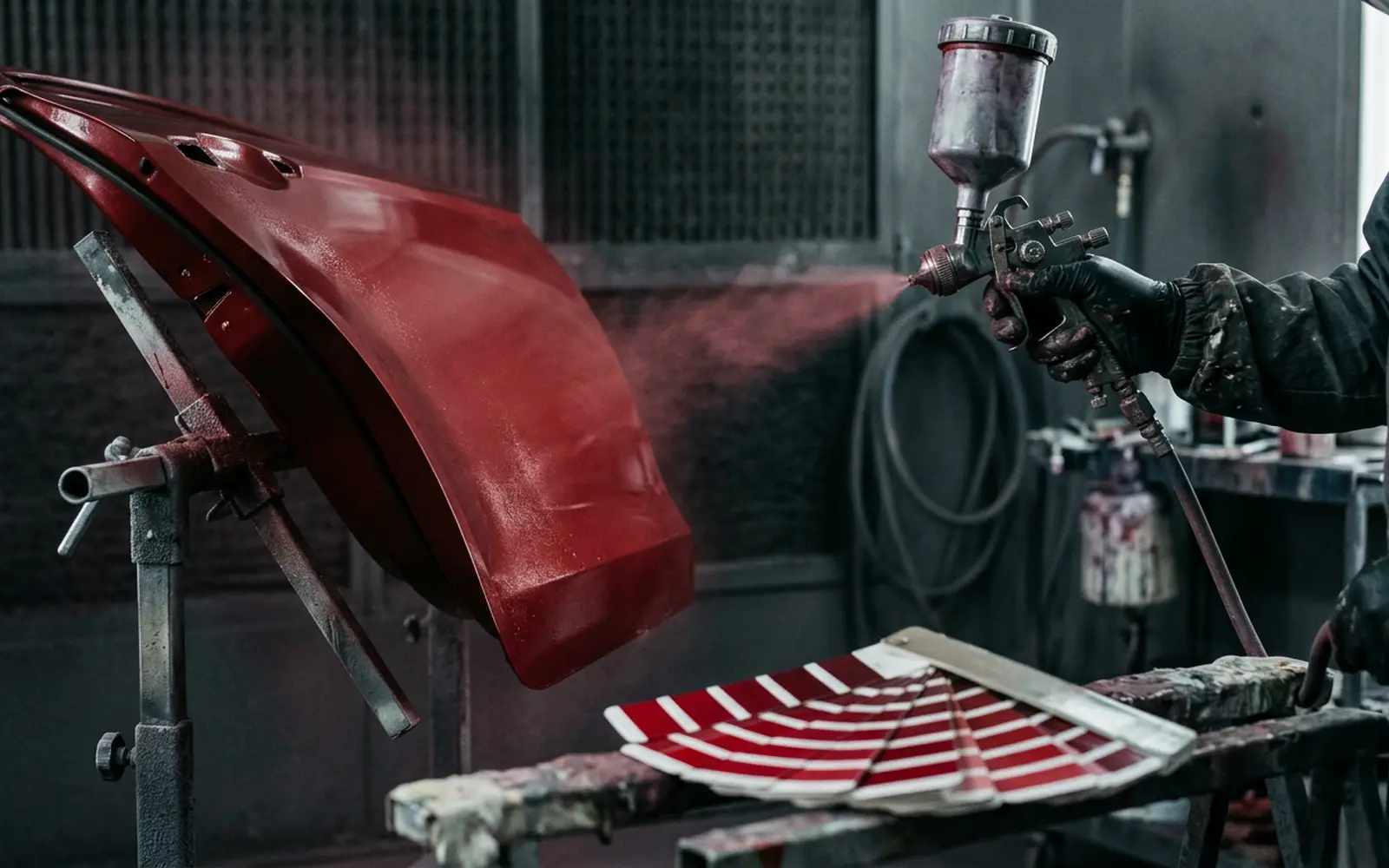
A workshop does not live on website visits. It lives on cars at the door. Between the two there is a form, and that is where people get lost.
In ten days, from 14 to 24 October 2026, we built the website, online booking and management panel for a body and paint workshop in Montijo: services, bookings, customers, damage photos and notifications, in one system.
The field we removed
The first version of the booking form asked for the manufacturer's paint code, the one on a plate inside the door. On paper it makes sense: the workshop needs the exact colour.
In practice almost nobody knows it, and whoever does not know it closes the tab. Worse, the workshop reads the colour from the car itself, with a spectrophotometer. The field asked the customer to work for information the workshop could already get on its own.
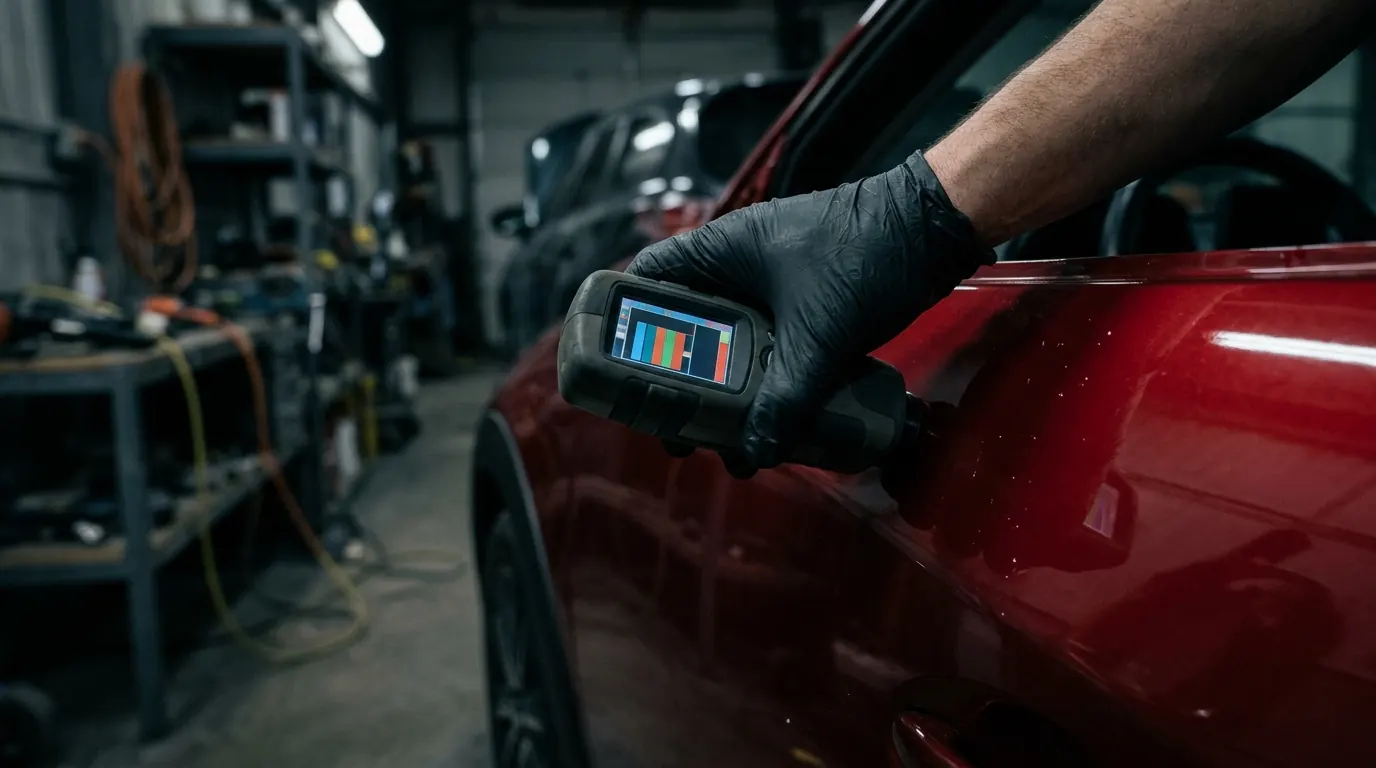
We removed it. Instead, when a booking includes paintwork, the customer goes on to their own area and adds photos of the damage. Up to eight, from the phone, sent one by one so that a weak signal cannot bring the whole upload down. The workshop sees the damage before the car arrives.
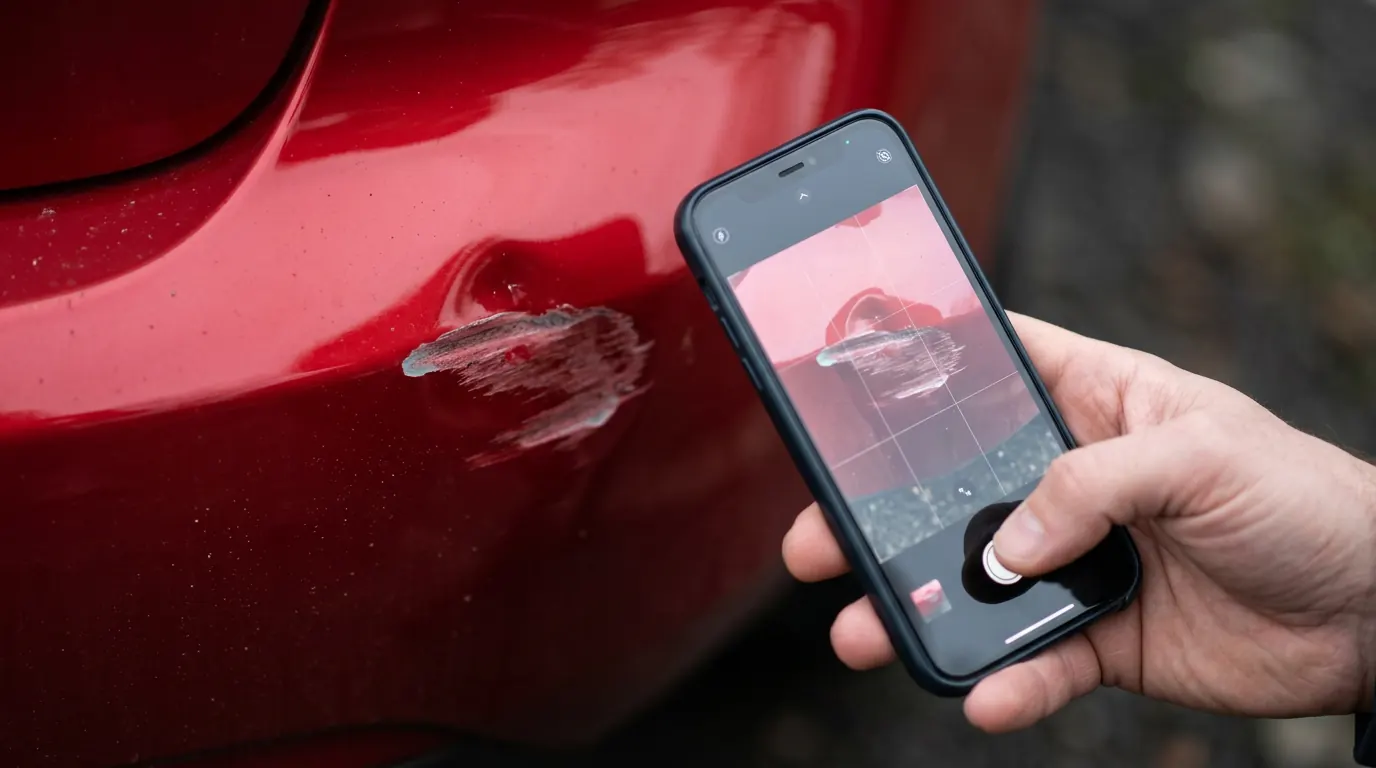
Ask after, not during: the simplest rule of form UX we know. The booking already exists; postponing the photos costs nobody anything.
The same care went into the fields that stayed. The Portuguese number plate formats itself as AA-00-AA while it is typed: half an hour of work that removes the most common typo in a booking.
Garage booking software for people with dirty hands
On the other side there is a board, New, Confirmed, In progress, Done, that you drag with a mouse or tap with a finger. The customer's number is always one tap away. Everything that happened to a booking fits on one screen. In Portuguese, English and Russian, because the person at the counter and the person in the paint booth do not always speak the same language.
Every email to a customer is first written to the booking's history, together with the mail server's reply. When someone says they never got anything, there is somewhere to look.
A bug we found before anyone complained
In production, Next.js fixes the list of public files when the site is built: anything saved there later answers 404 until the next release. We caught it on the first damage photos, and found that the same problem had been sitting silently in the blog's cover uploads since launch. Files now live outside the public folder and are served by a route of their own.
Fast, and nobody else's scripts
No Google Analytics and no cookie banner: the visit and click counter is ours and lives in the same database. The question "how many calls did the website bring this month" finally has an answer.
Measured in production on 24 October: the server answers in 38 to 54 ms, the first content appears in 224 to 308 ms, and nothing shifts while the page loads (CLS 0). A first visit to the home page loads 199 KB of compressed JavaScript and CSS. Lighthouse on mobile gives 100 for best practices and 96 for accessibility. Third-party scripts: none.
Under the hood: Next.js 16, React 19, TypeScript, Tailwind and Postgres, 14 production dependencies, 12 tables, and a catalogue of 26 services in 7 groups, organised around what people in Portugal actually search for, such as "revisão automóvel", "correia de distribuição" or "pintura de jantes".
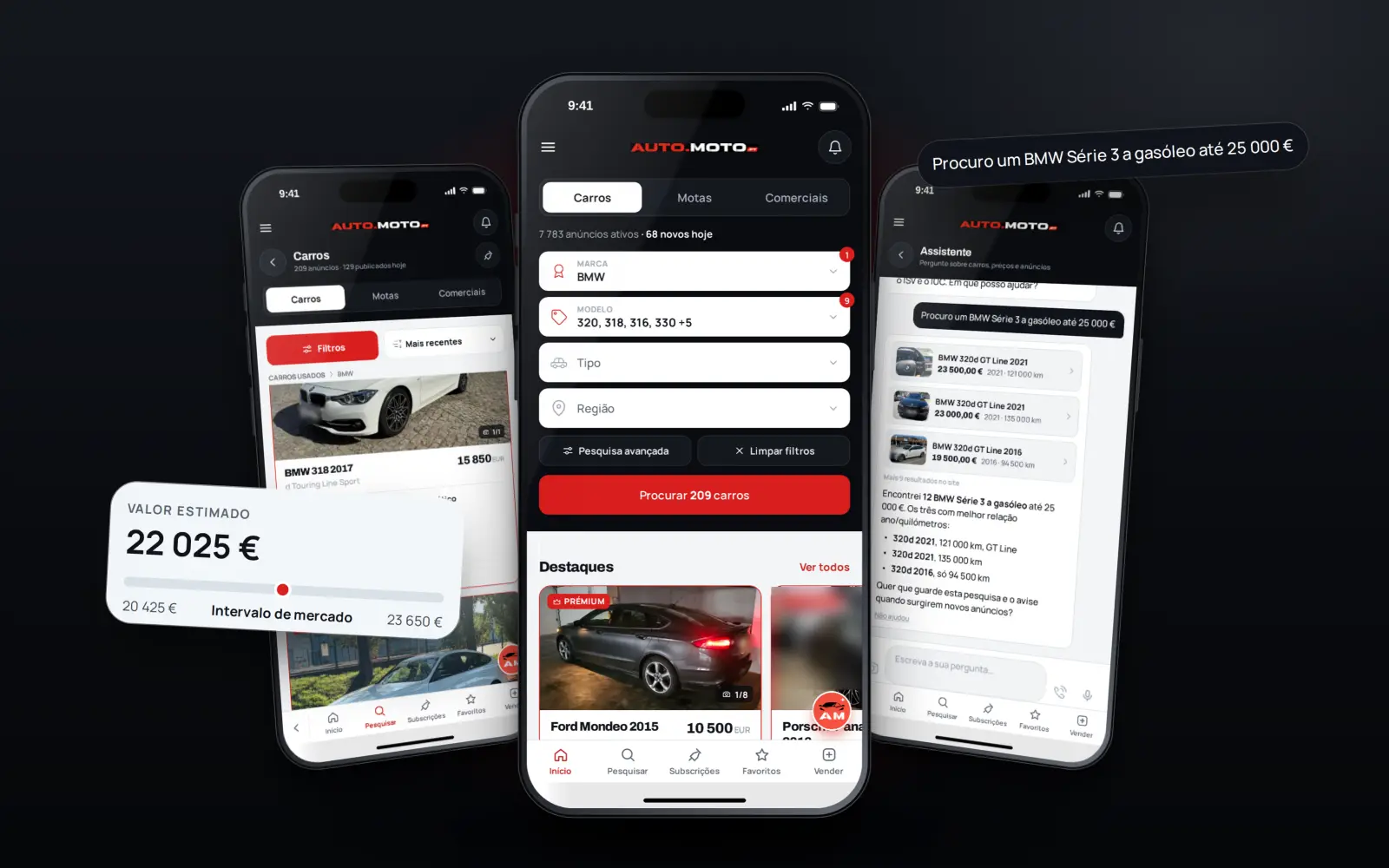
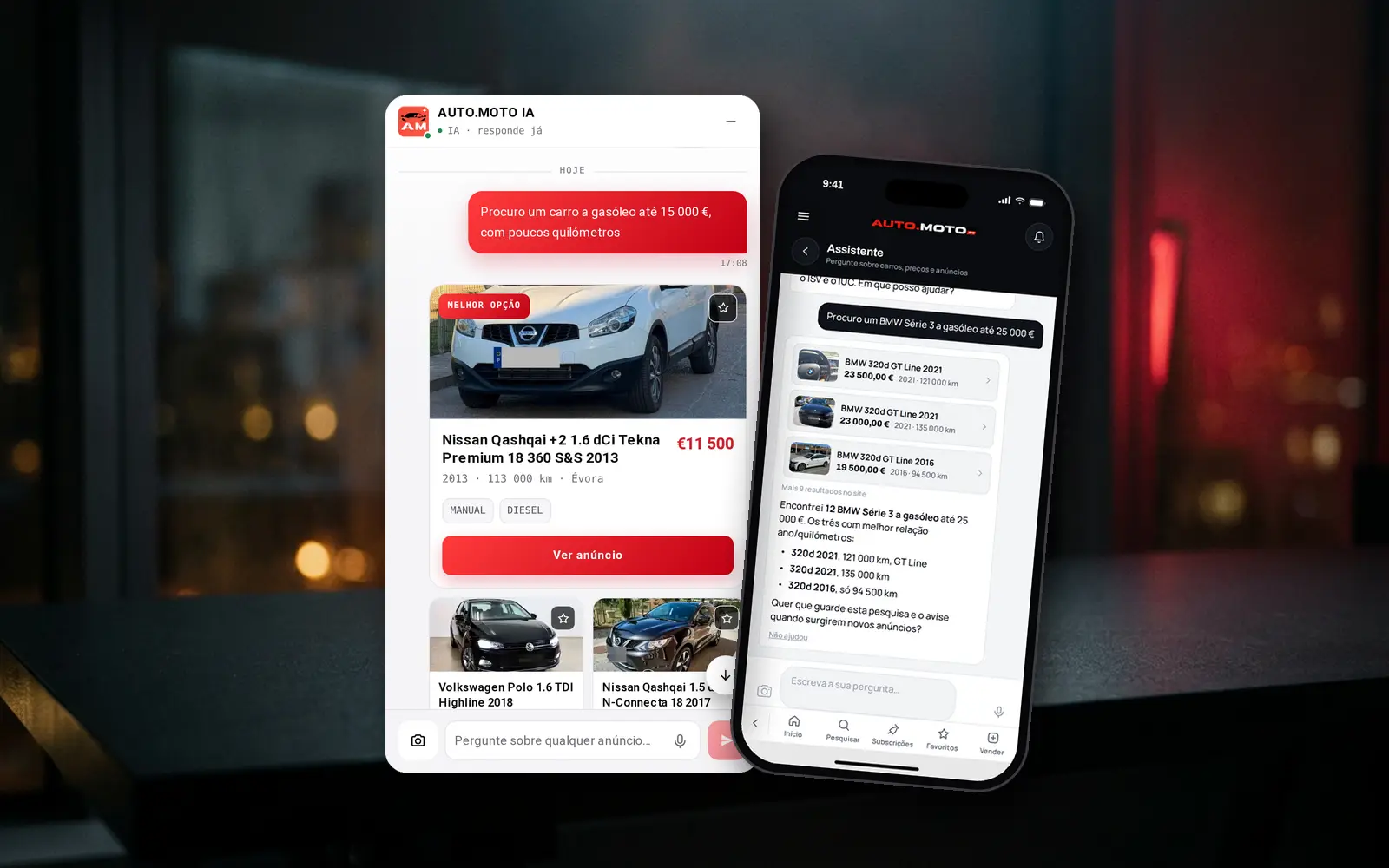
The same decisions go into auto.moto.pt(opens in a new tab), rent.moto.pt(opens in a new tab) and every website we build for clients, down to the custom software behind it. Phones on a weak signal get the same care in the AUTO.MOTO app. Have a similar project? Tell us what you are building.